
What Items Can Walk-Through Metal Detectors Detect?
Security is no longer just a concern for airports and government facilities. Today, businesses, schools, shopping malls, offices, and commercial buildings all face growing security challenges as visitor traffic continues to increase. Property owners and facility managers need reliable solutions that can help prevent prohibited items from entering their premises while maintaining a smooth and efficient visitor experience.
One of the most trusted security solutions available today is the walk-through metal detector. These advanced systems provide fast, non-intrusive screening, allowing security personnel to quickly identify metallic objects that could pose a potential safety risk. By combining smart detection technology with efficient access control, walk-through metal detectors help create a safer environment without causing unnecessary delays.
But what metal detector detect during a security screening?
In this article, we’ll explore the most common items detected by walk-through metal detectors and explain why they remain an essential component of modern security and access control systems.
Understanding How Walk-Through Metal Detectors Work
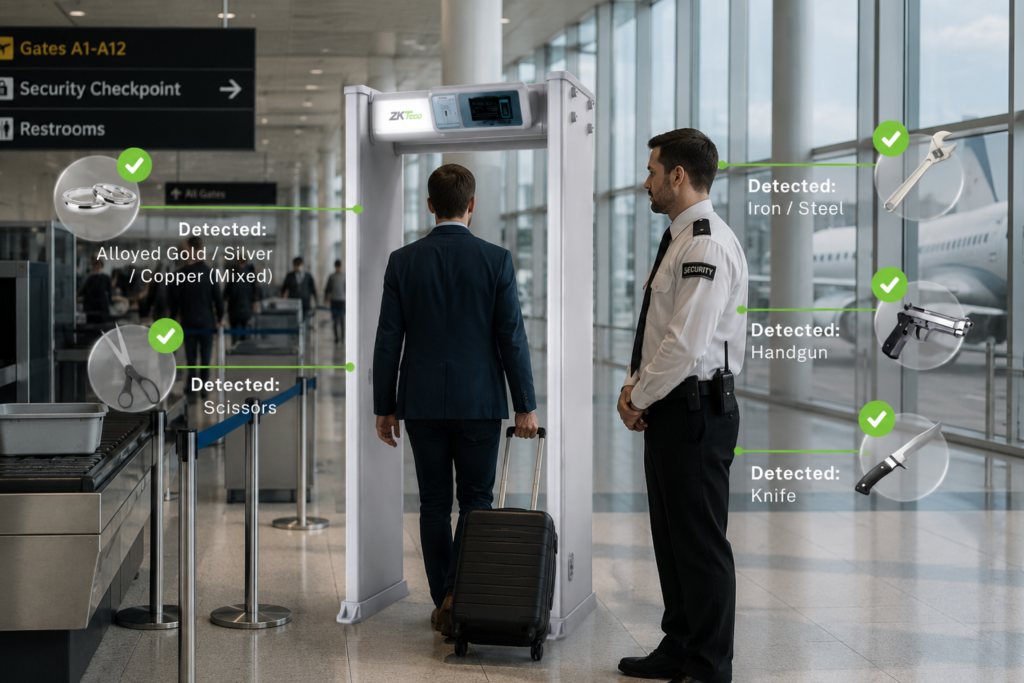
If you are wondering what metal detector detect, these systems are designed to detect a wide range of metal items, including keys, coins, mobile phones, tools, knives, firearms, and other metallic objects that may pose a security risk. Walk-through metal detectors use advanced electromagnetic technology to identify metallic objects carried by a person as they pass through the detection zone.
When a metallic object enters the detection field, the system immediately generates an alert through visual indicators, audible alarms, or zone-specific notifications. Advanced models can even pinpoint the approximate location of the detected item on the body, allowing security personnel to perform targeted inspections quickly and accurately while minimizing disruptions.
This combination of speed, precision, and ease of use makes walk-through metal detectors an ideal solution for modern security screening. Whether installed in schools, offices, shopping malls, factories, government buildings, or event venues, these systems help enhance safety, streamline visitor screening, and maintain a secure environment for everyone.
Common Items Detected by Walk-Through Metal Detectors

1. Weapons and Security Threats
The primary purpose of a walk-through metal detector is to identify potentially dangerous metallic items before they enter a secured area. These systems are capable of detecting a wide range of weapons and prohibited objects, including knives, handguns, firearm components, metal batons, sharp metallic tools, ammunition, and magazines.
By alerting security personnel to the presence of these items, walk-through metal detectors help prevent potential threats from entering schools, offices, government facilities, event venues, and other public spaces. Their ability to provide fast and reliable screening makes them an essential part of modern security operations, helping organizations reduce risks and create a safer environment for employees, visitors, and the public.
2. Mobile Phones and Electronic Devices
Modern electronic devices contain various metal components, making them easily detectable during security screening. Walk-through metal detectors can identify items such as smartphones, tablets, laptops, power banks, smartwatches, and other portable electronic devices carried by visitors.
Because these devices contain metal frames, circuits, batteries, and internal components, they may trigger an alarm when passing through the detection zone. Depending on the security requirements and sensitivity settings, security personnel may ask visitors to remove electronic devices before screening to ensure a faster and more efficient inspection process.
3. Keys and Keychains
Keys are among the most commonly detected objects during security screenings. House keys, office keys, vehicle keys, and large keychains contain enough metal to trigger an alarm, particularly in highly sensitive environments such as government facilities, courts, and correctional institutions.
Although keys are generally harmless, they demonstrate how sensitive modern metal detectors have become.
4. Coins and Metal Accessories
Walk-through metal detectors can easily detect a variety of everyday personal items that contain metal components. Common examples include coins, belt buckles, bracelets, necklaces, rings, watches, and certain hair accessories.
Although these items are generally harmless, they can trigger an alarm depending on the detector’s sensitivity settings and the amount of metal present. To ensure a smoother and faster screening process, security personnel often ask visitors to empty their pockets and remove large metal accessories before passing through the detector.
5. Tools and Maintenance Equipment
Walk-through metal detectors are capable of detecting a wide range of hand tools and maintenance equipment carried into secured areas. Items such as screwdrivers, wrenches, pliers, utility knives, measuring tools, and multi-tools contain significant metal components that can easily trigger the detector during screening.
This detection capability is especially important in corporate offices, factories, warehouses, data centers, and government facilities, where unauthorized tools may pose safety, security, or operational risks. By identifying these items before entry, walk-through metal detectors help organizations maintain tighter access control and create a safer working environment.
What Walk-Through Metal Detectors Cannot Detect
When discussing what metal detector detect, it is equally important to understand their limitations. Walk-through metal detectors are specifically designed to identify metallic objects such as keys, coins, mobile phones, tools, knives, firearms, and other metal items. However, they are not designed to detect objects made entirely from non-metallic materials.
In most cases, walk-through metal detectors cannot detect items made solely from substances such as plastic, wood, paper documents, fabric, or rubber. Because these materials do not contain metal, they do not create the electromagnetic disturbance required to trigger an alarm.
Where Walk-Through Metal Detectors Are Commonly Used

Today, schools, universities, office buildings, government facilities, shopping malls, factories, warehouses, airports, hospitals, hotels, event venues, and data centers use walk-through metal detectors to strengthen security and control access to sensitive areas.
Walk-through metal detectors offer a major advantage in high-traffic environments. They allow security teams to screen large numbers of people quickly without creating long queues or disrupting daily operations. As a result, organizations can maintain strong security standards while providing a smooth visitor experience.
These systems help security personnel identify potential threats efficiently and respond faster to security concerns. Their combination of speed, accuracy, and reliable threat detection makes walk-through metal detectors one of the most trusted security solutions for modern facilities.
Conclusion
Walk-through metal detectors play a vital role in modern security screening by helping identify metallic objects that may pose a safety risk. From weapons and tools to electronic devices and everyday accessories, these systems provide fast and reliable detection while maintaining smooth visitor flow.
For homeowners, office owners, shop operators, and commercial building managers, investing in a quality walk-through metal detector can significantly enhance security without disrupting daily operations.
As security requirements continue to evolve, modern metal detection technology offers a practical, efficient, and professional solution for protecting people, property, and business operations.